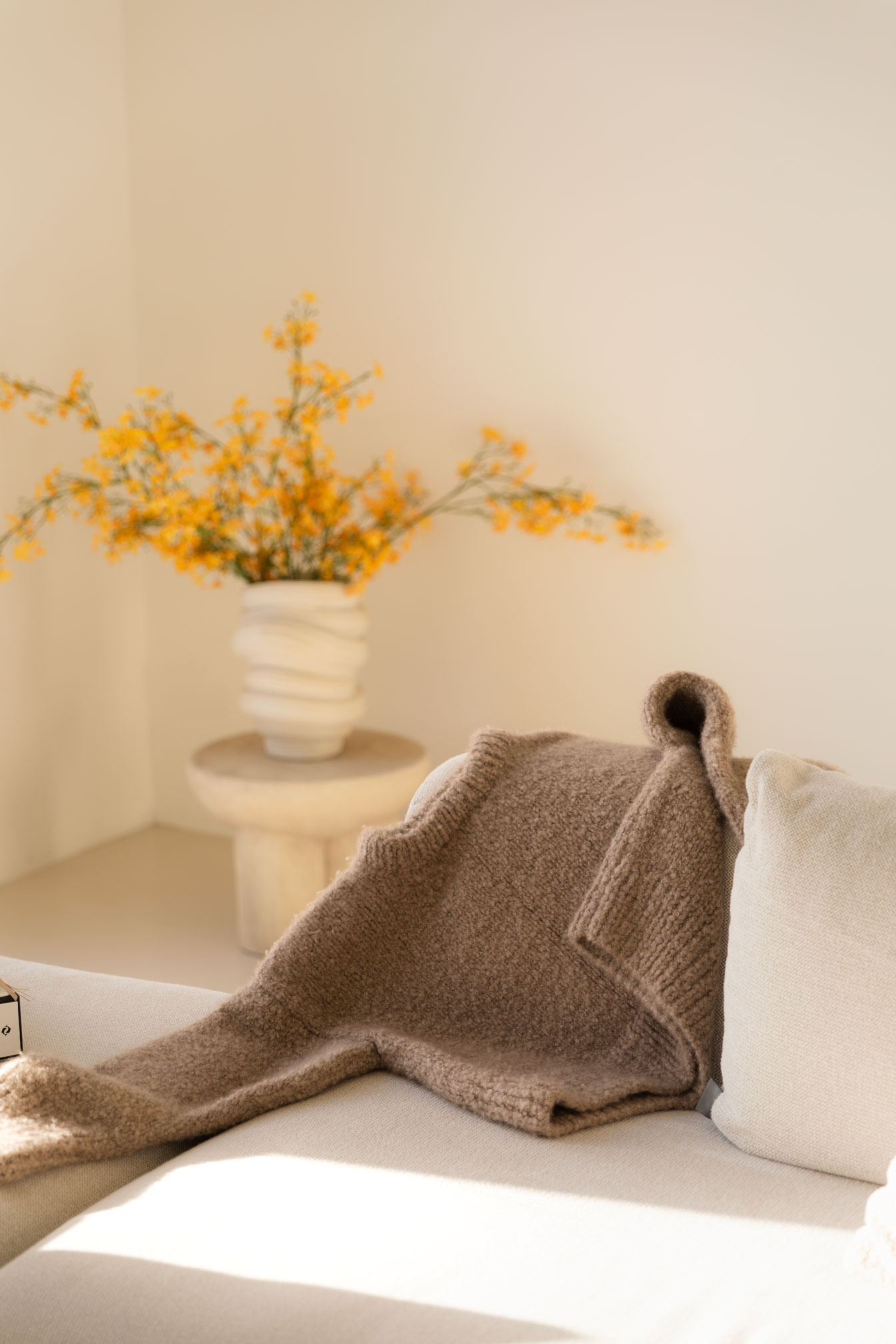
There was a time when I thought all cashmere felt more or less the same. Soft, warm, and slightly indulgent – something you reach for when the weather turns colder.
But over time, after wearing different pieces across seasons and travels, I started noticing the differences. Some knits would lose their shape. Others felt soft at first, but didn’t age well. And then there were a few pieces that felt right from the beginning – and continued to feel better the more I wore them.
That’s when I realised that good cashmere is not just about softness. It’s about how it feels over time, how it sits on the body, and how naturally it becomes part of your everyday wardrobe.
What actually defines good cashmere?
There isn’t a single indicator, but rather a combination of elements that work together quietly.
The fibre itself
Good cashmere starts with the fibre. Finer fibres tend to feel softer and smoother on the skin, while also allowing the knit to remain light rather than heavy. But softness alone can be misleading – some pieces are treated to feel soft initially, without having the same longevity.
Over time, you begin to notice the difference between something that simply feels soft, and something that wears well.
The way it feels on the body
This is often overlooked, but it makes all the difference. Some cashmere knits feel slightly flat or too fitted, while others have a more natural structure – soft, but with a gentle volume that allows the piece to sit comfortably on the body.
Those are usually the pieces you keep reaching for. The ones that don’t require adjustment, and feel right without effort.
How it behaves over time
Good cashmere doesn’t just look good on the first wear. It should:
- retain its shape
- soften naturally with use
- avoid excessive pilling
A certain amount of pilling is normal, especially at the beginning. But the overall structure of the piece should remain intact. This is often where quality becomes most visible – not immediately, but after repeated wear.
Where and how it is made
With so much discussion around sustainability, it’s easy to focus only on labels. But what matters more is consistency – between materials, production, and the final piece.
I tend to look for knitwear made in smaller batches, with attention to detail, and a clear sense of where and how it was produced. Not necessarily perfect, but considered.
Why material alone is not enough
It’s easy to assume that if something is made from cashmere, it will automatically feel good. But material is only one part of the equation.
Design plays an equally important role.
A beautiful yarn can still result in a piece that feels slightly off – too tight, too flat, or simply not comfortable to wear. And on the other hand, when both material and design are aligned, the result is something you don’t really think about – you just wear it.
Especially when travelling, I find myself relying on those pieces the most. Something soft, easy, and adaptable. A piece that works in different settings, without needing to be changed or adjusted throughout the day.
A more personal note on what I look for
Over time, I’ve moved almost entirely toward natural fibres – not as a strict rule, but because of how they feel.
There’s a difference that’s hard to explain until you experience it regularly. Natural materials tend to breathe better, sit differently on the skin, and simply feel more comfortable over long periods of wear.
I also pay attention to where a piece is made, and how consistent a brand feels in its approach. With so much greenwashing in fashion, it’s easy to get distracted by claims. I tend to trust what I can see and feel over time.
And finally, design. Because even the best material won’t work if the piece doesn’t feel right when worn.
A note on the pieces I create
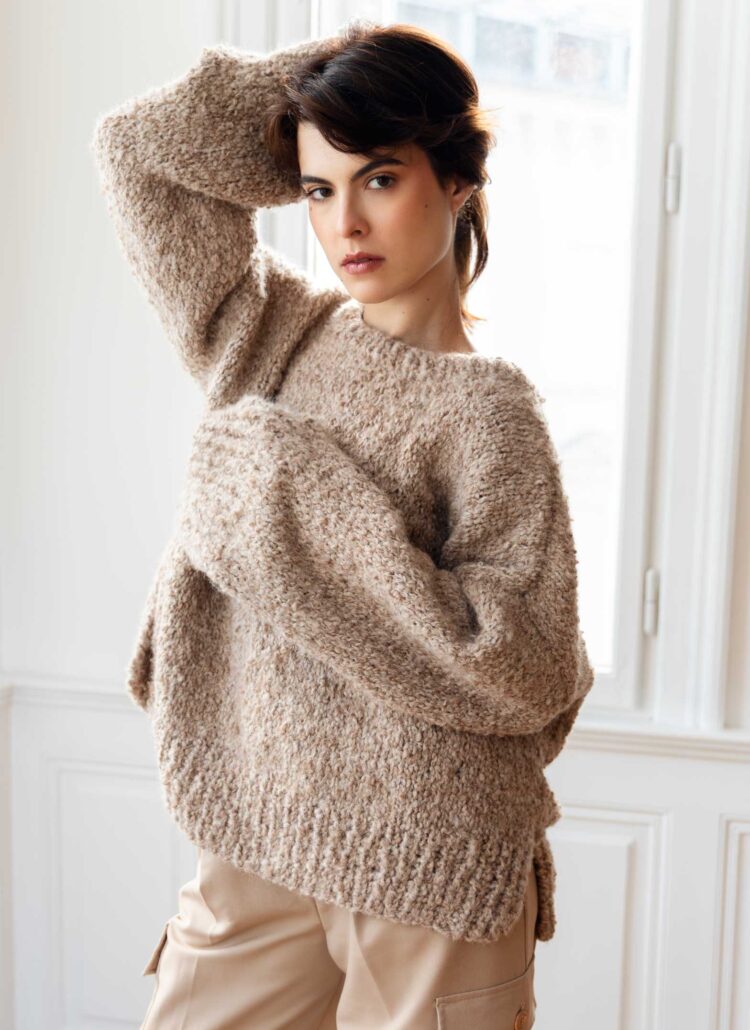
The same approach naturally extends to my own work at Onika Knitwear. I focus on natural fibres, soft structure, and pieces that feel easy to wear over time. Materials include grade A bouclé cashmere, alongside carefully selected yarns such as mohair and wool, chosen for their softness and durability.
Each piece is produced in small batches, either handcrafted or developed with specialised partners, with attention to how the knit behaves – not only visually, but in everyday wear.
You can explore more here:
Final thoughts
Good cashmere is not always the softest at first touch, or the most visually perfect.
Often, it’s the piece that becomes better over time – the one that keeps its shape, feels comfortable without effort, and naturally becomes part of how you dress.
And in the end, those are the pieces that stay.
Disclosure: This article includes a reference to Onika Knitwear, which is my own label. All opinions are my own, and the brands or materials mentioned are selected based on personal experience and preference.

Leave a Reply