There are places in the Austrian Alps that make you stop and take in the beauty around you. The Wilder Kaiser is one of them. With its dramatic limestone peaks rising above green meadows, traditional Tyrolean villages and endless mountain trails, the Wilder Kaiser is one of the most scenic mountain regions in the Austrian Alps.
Located between Kufstein and St. Johann in Tirol, the region is particularly appealing for spending time outdoors, whether hiking mountain trails, discovering picturesque alpine lakes or simply taking in the scenery from one of the many mountain viewpoints.
The Wilder Kaiser centres around four main villages: Ellmau, Going, Scheffau and Söll. Each has its own character and offers a different perspective on this beautiful corner of Tyrol, making the region an excellent destination for exploring over several days.
Where to Stay at the Wilder Kaiser: My Stay in Ellmau
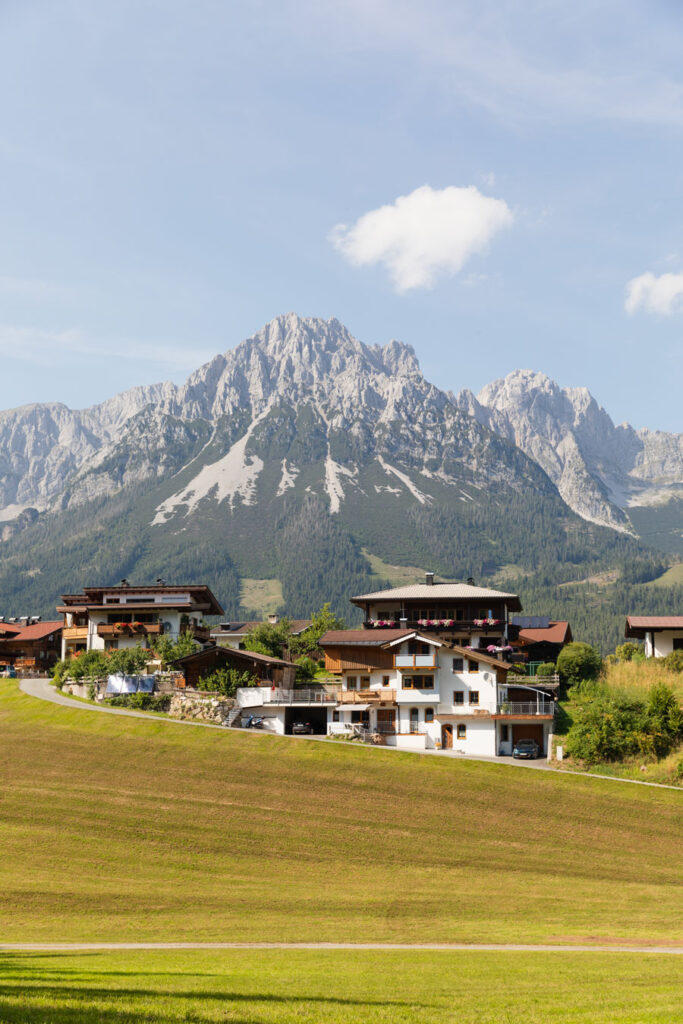
For my recent trip to the Wilder Kaiser, I chose Ellmau as my base, staying at Kleeblatt Ellmau, a charming apartment just a few minutes from the famous Bergdoktor practice. The apartment is wonderfully connected to nature, overlooking a green meadow, a small woodland and Hartkaiser mountain.
The hosts had put considerable thought into the details, from small decorative pieces sourced from local artists and artisans to natural toiletries made by an Austrian manufacturer. Each detail seemed to have its own story. It was a lovely place to return to after a day spent exploring the region.
I found Ellmau especially convenient as a base. Hiking trails begin directly around the village, the Hartkaiser cable car takes you up into the mountains, and the surrounding villages are easy to reach by car or public transport.
Best things to do at the Wilder Kaiser
Hintersteiner See
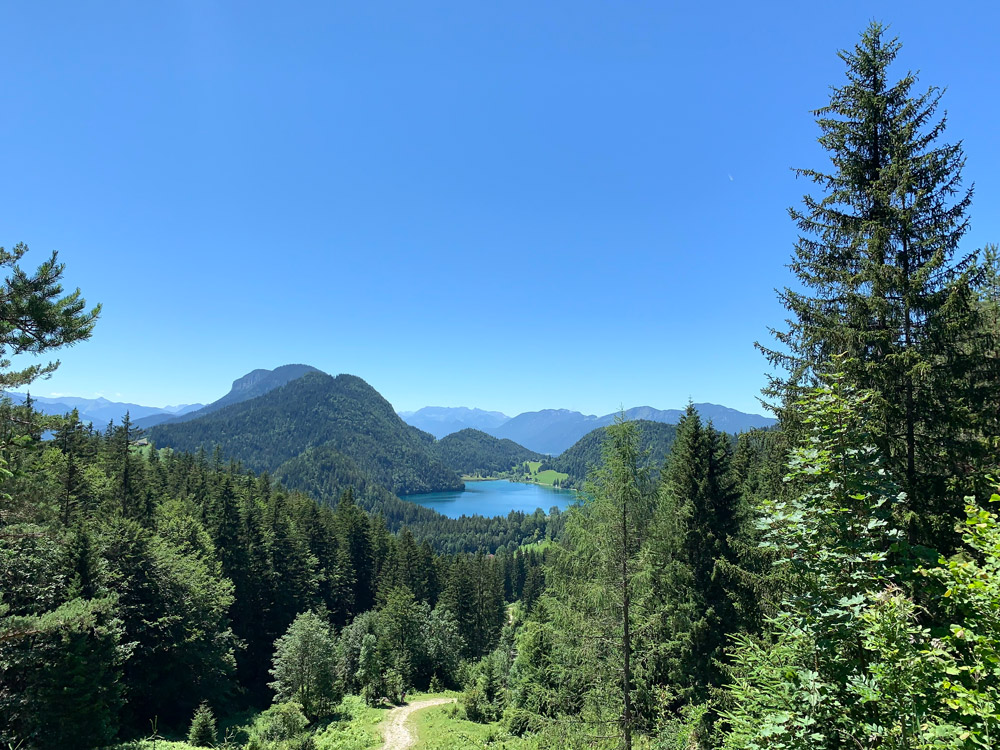
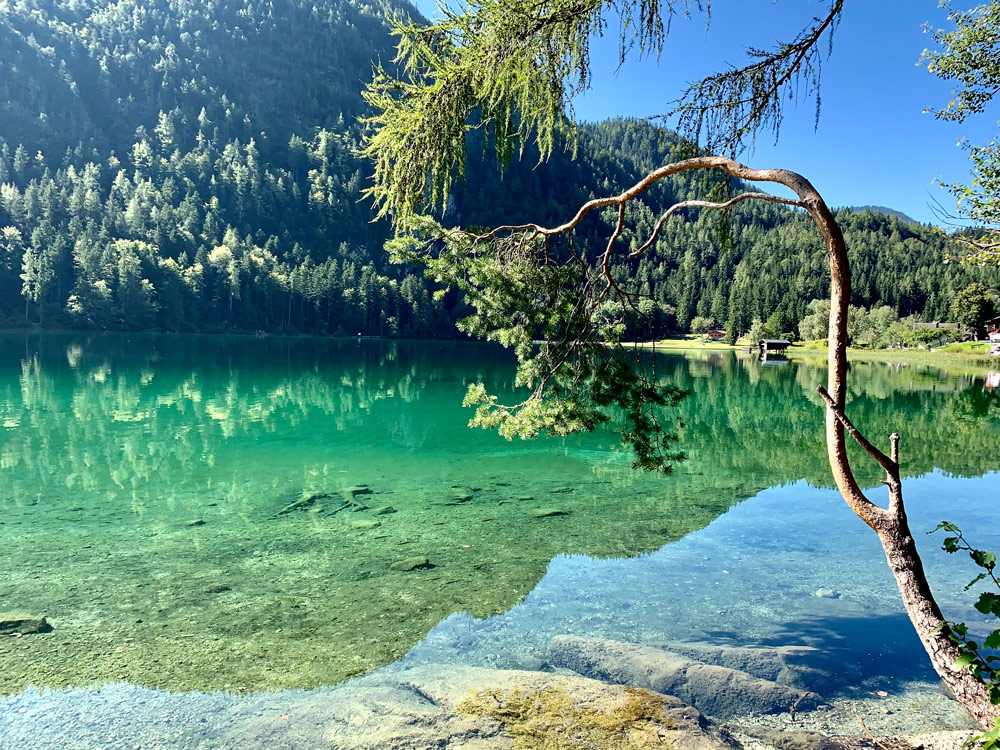
Hintersteiner See is part of a protected nature reserve and one of the most beautiful places in the Wilder Kaiser region. Surrounded by Kaiser mountains, the lake is known for its exceptionally clear, turquoise-green water. From above, it almost looks like an emerald set in the middle of the wild landscape.
Its water is remarkably clear, with a beautiful turquoise-green colour, and the natural setting makes it feel quite special. The lake is also one of the few places where you can find European crayfish, thanks to the small river that feeds it.
If you are staying in Ellmau without a car, the region’s public transport network is also useful here. The Wanderbus to Hintersteiner See operates during the warmer months, while the KaiserJet connects Ellmau with Going, Scheffau and Söll, as well as mountain cable cars and other attractions.
The Astberg and Astbergsee
One of the most beautiful places to discover in the Wilder Kaiser region is the Astberg, a panoramic mountain above the village of Going. Reached by the Astbergbahn, a four-seater chairlift that takes you up to around 1,255 metres, it offers wonderful views across the surrounding Tyrolean mountains, with the striking peaks of the Wilder Kaiser right in front of you.
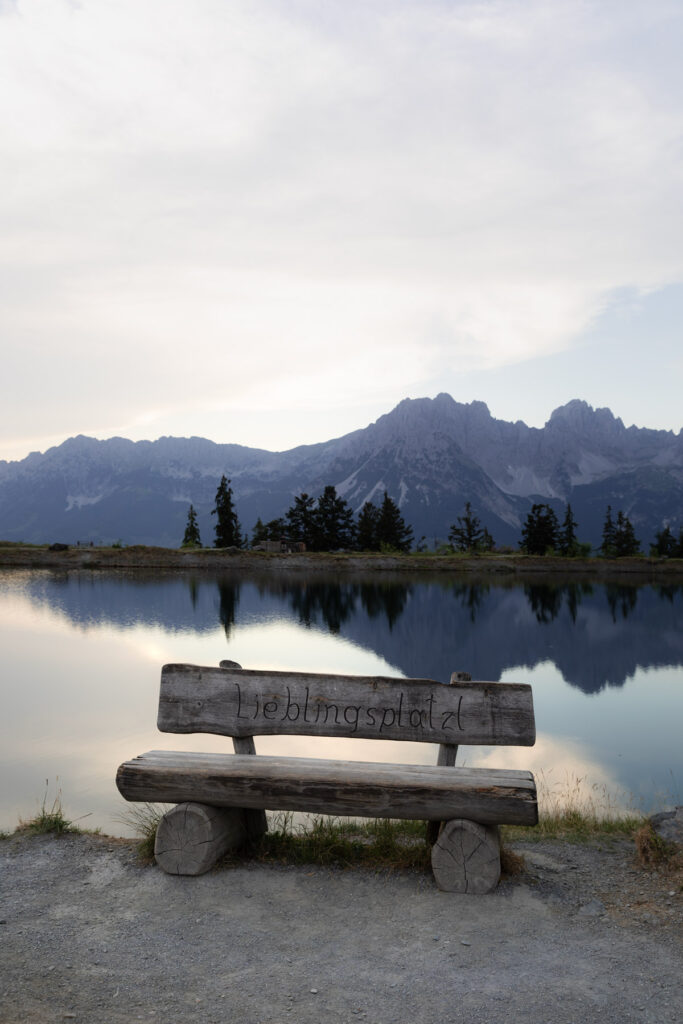
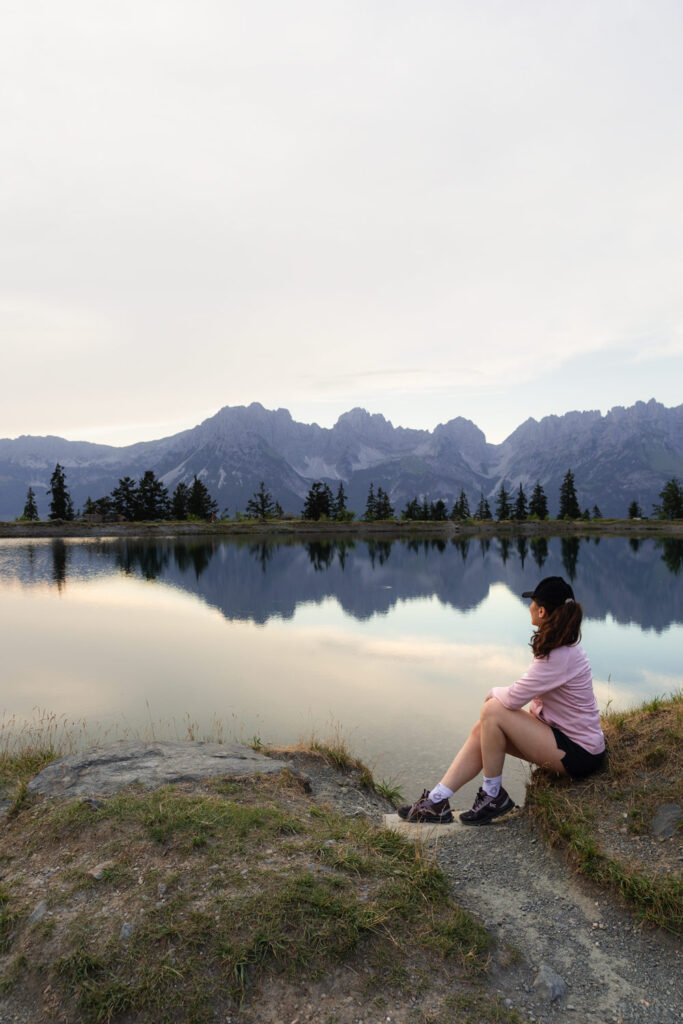
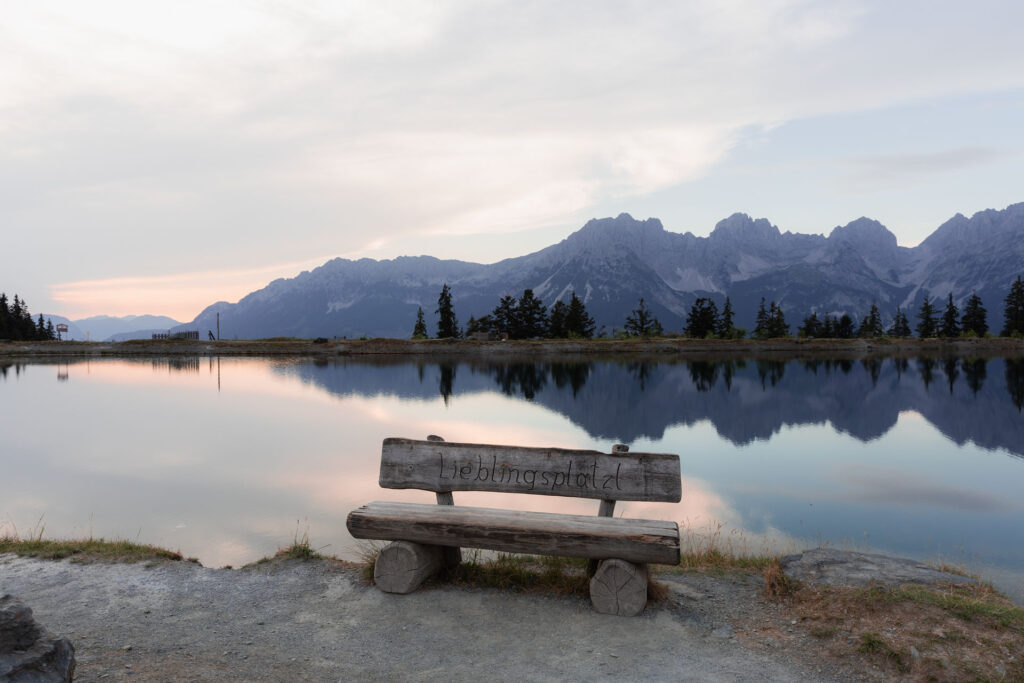
The highlight is undoubtedly the Astbergsee, a small mountain lake known for its beautiful reflection of the Wilder Kaiser. Often called the Mirror of the Kaiser, it is one of the region’s most picturesque spots and a lovely place to pause, take photographs and simply enjoy the mountain scenery. On a calm day, the lake’s surface reflects the entire mountain range, creating an almost perfect mirror image.
There is more to enjoy here than the view alone. A pleasant circular path leads around the lake, making it an easy walk. Nearby, the Pony Alm, with its ponies and lovely alpine sheep, is also a popular place. For a particularly lovely viewpoint, look out for the wooden loungers at the Kaiserkino, where you can sit back and take in the panorama.
Whether you come for a leisurely walk, a few hours in the mountains or simply to admire one of the most beautiful views in the Wilder Kaiser, the Astberg is well worth including in your itinerary.
The Bergdoktorhaus in Ellmau
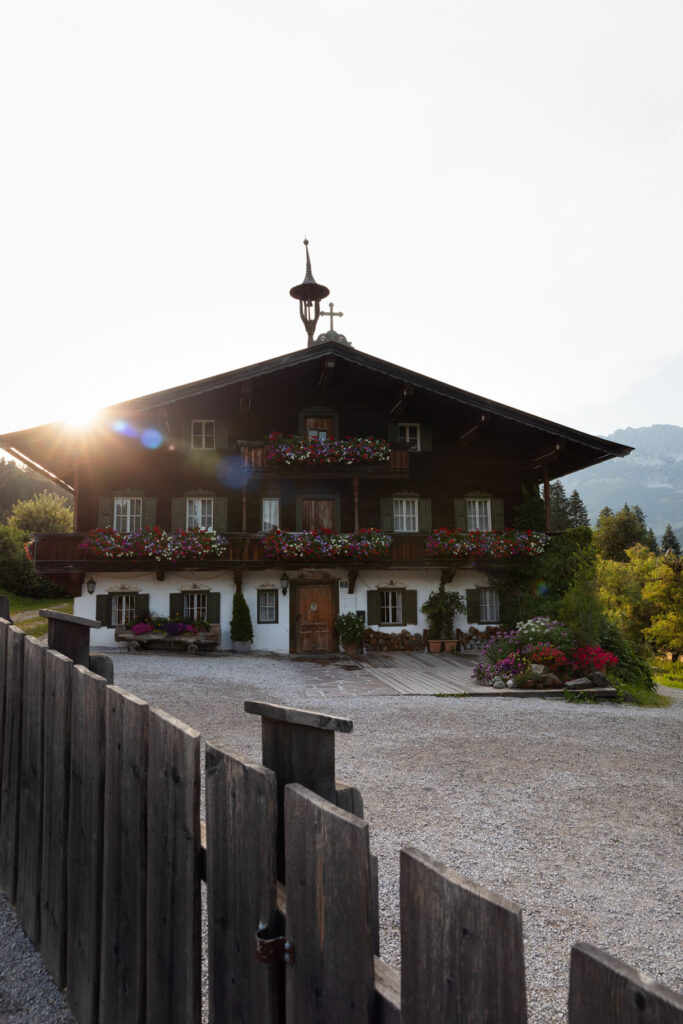
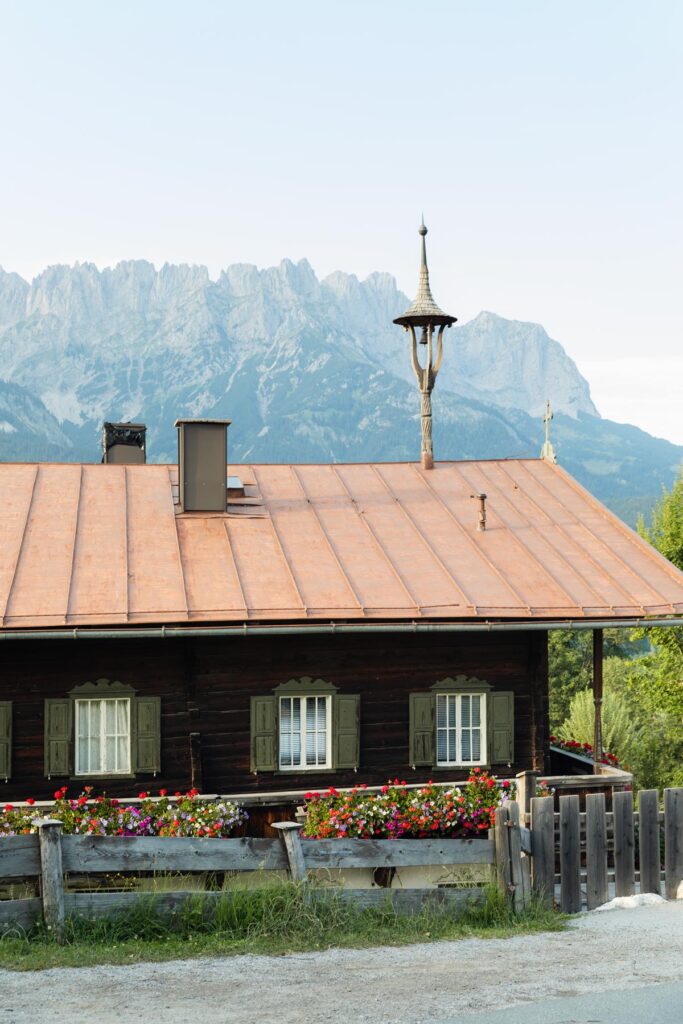
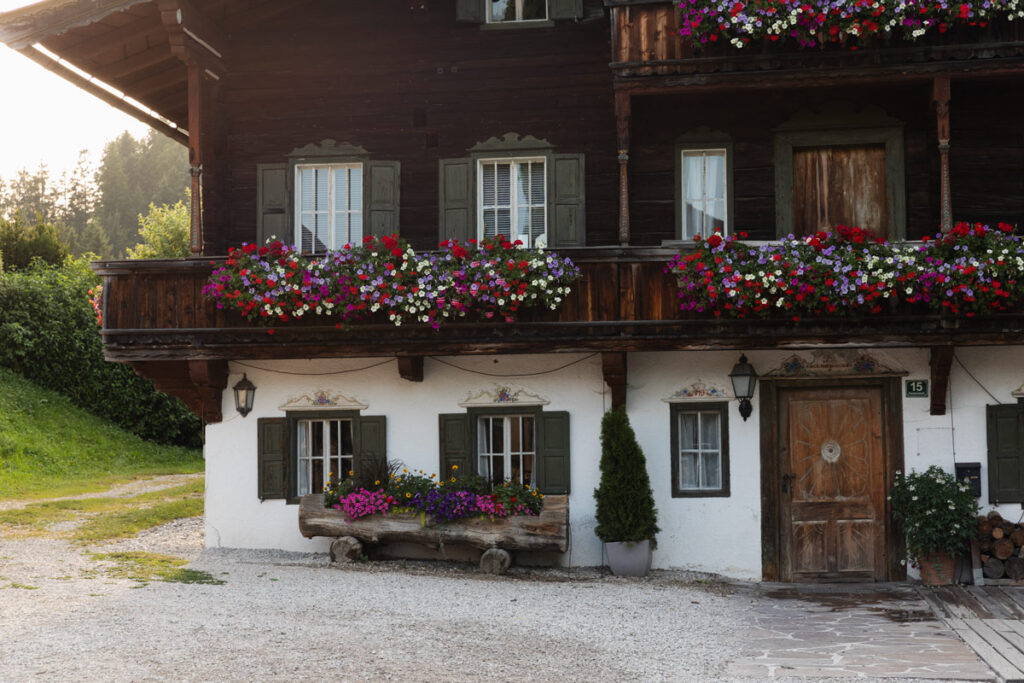
If you know Der Bergdoktor, you will probably recognise the house immediately. The traditional house in Ellmau is the original filming location of the Bergdoktor’s practice, former the Hinterschnabel farm at Faistenbichl. The farmhouse dates back centuries, while the residential section was transformed into the doctor’s practice when the filming team discovered the property in 2007.
I stayed only about five minutes’ walk from the Bergdoktorhaus, which made visiting it particularly easy. The setting itself is worth seeing even if you are not a devoted fan of the series: the house sits above Ellmau, surrounded by meadows and mountain views, with the Wilder Kaiser forming an impressive backdrop.
The practice can be visited during designated opening times, although these vary throughout the season and filming can occasionally affect access. It is worth checking the current opening information before planning your visit, particularly if seeing the filming location is one of the main reasons for your trip.
And there is much more to Der Bergdoktor around the Wilder Kaiser. Several filming locations are spread across Ellmau, Going, Scheffau and Söll, including the famous Gruberhof in Söll, the village square in Going and Lake Hintersteiner See in Scheffau.
Visit Kitzbühel
If you have a little more time to explore the surroundings of the Wilder Kaiser, I would also recommend a visit to Kitzbühel. This famous Alpine town has a lovely historic centre, with colourful traditional buildings, small streets, cafés and plenty of boutiques and shops. It has a rather elegant, slightly glamorous atmosphere, with a touch of Alpine sophistication that makes it quite different from the smaller villages of the Wilder Kaiser.
Kitzbühel is perhaps best known internationally for the annual Hahnenkamm Race, held every January on the legendary Streif downhill course. Considered one of the most challenging and demanding downhill races in the world, it attracts the best ski racers as well as visitors, celebrities and international guests from all over the world. The race weekend is as much a social event as a sporting one, with a lively atmosphere, parties and celebrations taking over the town. If you visit during the warmer months, you will experience a very different side of Kitzbühel, but its historic centre and mountain setting are just as worth discovering.
Take the Hartkaiser cable car from Ellmau
One of the easiest ways to experience the mountains without committing to a demanding hike is to take the Hartkaiserbahn from Ellmau. What I particularly like about this option is that you do not have to be an experienced mountaineer to enjoy the scenery. You can combine the cable car with a gentle walk and spend as much or as little time as you like in the mountains.
The cable car takes you up to the Hartkaiser at around 1,550 metres, where you can continue on foot along the mountain trails and enjoy panoramic views of the surrounding landscape. The area is also home to Ellmi’s Zauberwelt, a family-oriented mountain attraction.
Biking and Mountain Biking
Biking is a popular way to explore the Wilder Kaiser region, with a well-developed network of routes for both leisurely rides and more challenging mountain biking adventures. There are plenty of options for renting regular bikes, e-bikes and e-mountain bikes in the four villages, making it easy to discover the surrounding countryside at your own pace.
From scenic cycle paths through the valleys to dedicated mountain bike trails and guided tours, the region offers something for different abilities and interests. The routes also connect the Wilder Kaiser with neighbouring destinations, with some routes taking you towards well-known Alpine destinations such as Kitzbühel.
Hiking, Climbing and Via Ferrata
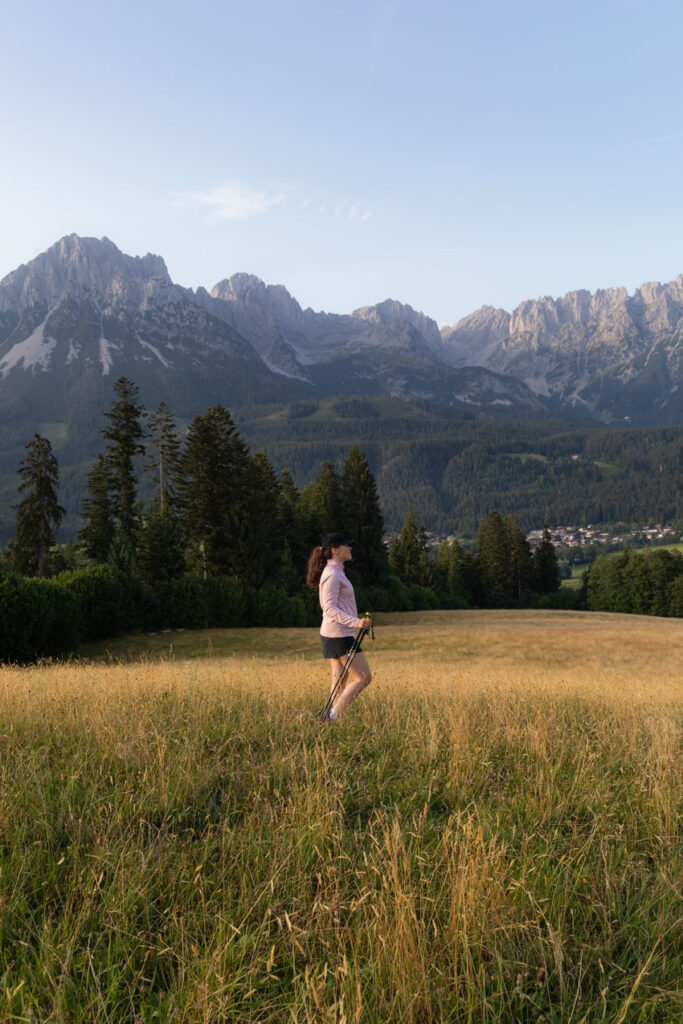
The Wilder Kaiser is made for hiking, with everything from easy valley walks to demanding alpine routes. Whether you prefer leisurely walks through alpine meadows, scenic panoramic trails or more challenging mountain hikes, the region offers plenty of opportunities to enjoy the outdoors at your own pace.
What makes the landscape particularly special is its variety. On one side, the impressive limestone peaks of the Wilder Kaiser rise dramatically above the valleys, creating a spectacular backdrop for walks through forests, alpine pastures and mountain trails. Across from them, the gentler grassy slopes of the Kitzbühel Alps offer a different perspective, with beautiful panoramic views of the Kaiser mountain range. Along the way, you will come across mountain lakes, streams, traditional alpine huts and countless places to stop and admire the scenery.
For those looking for something more adventurous, the Wilder Kaiser is also one of Austria’s most renowned climbing destinations. Its dramatic rock faces, towers and ridges offer opportunities for sport climbing, multi-pitch routes and challenging alpine climbs. The area has a particularly rich climbing history: around the turn of the 20th century, it became known as the “German University of Climbing”, attracting pioneering climbers who helped shape the development of modern mountaineering techniques and equipment.
Via ferrata routes offer another way to experience the mountains, combining hiking with sections of secured climbing. There are routes of varying difficulty, from practice routes suitable for gaining experience to demanding mountain crossings for more advanced climbers. The region also caters to younger visitors, with introductory climbing experiences and family-friendly activities available, making it possible for children to discover the excitement of climbing in a supervised setting.
Another advantage is the excellent network of mountain cable cars connecting the four villages of Ellmau, Going, Scheffau and Söll. They make it possible to reach higher elevations without having to tackle the entire ascent on foot, opening up a variety of scenic walking routes for different fitness levels. You can spend a few relaxed hours exploring the mountain landscape or set out on a longer hike, with the freedom to choose how adventurous you want your day to be.
I visited the Wilder Kaiser during the warmer months and was impressed by just how much there is to discover in the region. From hiking and cycling to climbing, swimming in mountain lakes and exploring the different mountain adventure worlds, there are activities for all ages and fitness levels. The infrastructure is particularly well organised, with mountain cable cars, well-marked trails, bike rental shops, guided excursions and excellent connections between the villages. Whether you are looking for an active mountain holiday or simply want to enjoy the scenery at a more relaxed pace, there is plenty to choose from.
The Wilder Kaiser is equally well prepared for the winter season. As part of the SkiWelt Wilder Kaiser–Brixental, one of Austria’s largest interconnected ski areas, it offers an extensive network of ski slopes and modern lifts, alongside winter hiking, cross-country skiing, tobogganing and other snow activities. Having seen the region in summer, I can easily imagine how different the landscape must feel under a blanket of snow. It is certainly a destination I would love to return to in winter.


Leave a Reply